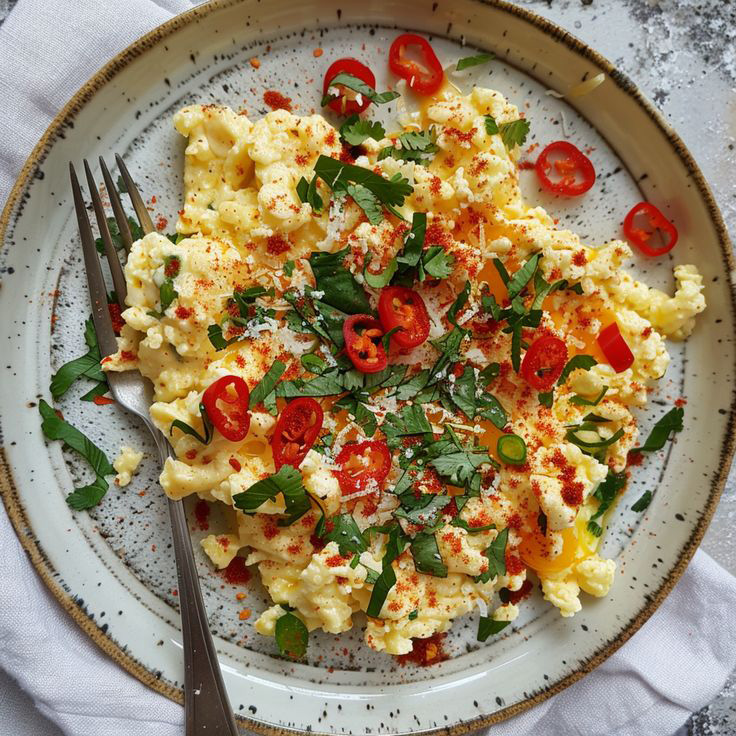
There’s something quietly magical about scrambled eggs. They’re often the very first thing we learn to cook, standing on a stool at the stove while someone older guides our hand. They show up on sleepy mornings, rushed school days, lazy weekends, and cozy breakfasts shared with family. Across cultures and kitchens, scrambled eggs have always been a comfort food—simple, affordable, and endlessly forgiving. Yet when done just right, they feel luxurious, soft, and almost indulgent.
Perfect scrambled eggs aren’t about fancy ingredients or complicated techniques. They’re about patience, gentle heat, and paying attention. When you slow down just a little, the eggs reward you with silky curds, rich flavor, and that warm, buttery aroma that fills the kitchen and makes everyone wander in asking, “Is breakfast ready?” Let’s walk through it together, step by step, like we’re cooking side by side.
Prep Time
5 minutes
Cook Time
5–7 minutes
Total Time
About 10–12 minutes
Ingredients (Serves 2)
- 4 large eggs
- 2 tablespoons whole milk or heavy cream
- 1 tablespoon unsalted butter
- ¼ teaspoon salt (or to taste)
- ⅛ teaspoon freshly ground black pepper
Step-by-Step Instructions
- Crack and whisk the eggs
Crack the eggs into a medium bowl. Add the milk or cream, salt, and pepper. Whisk gently until the yolks and whites are fully combined and look pale yellow. Don’t overwhisk—this isn’t about adding air, just blending everything smoothly. - Warm the pan slowly
Place a nonstick skillet over low to medium-low heat. Add the butter and let it melt slowly. You want it fully melted and slightly foamy, but not browned. This gentle heat is the secret to soft, creamy eggs—don’t rush this step. - Pour and pause
Pour the eggs into the pan and let them sit for a few seconds without stirring. This helps them start setting evenly at the bottom and creates tender curds instead of tiny bits. - Stir gently and patiently
Using a silicone spatula or wooden spoon, slowly push the eggs from the edges toward the center. Keep stirring gently, scraping the bottom so nothing sticks. The eggs should cook slowly and stay slightly glossy. - Remove before they look done
When the eggs are mostly set but still a little soft and creamy, take the pan off the heat. They’ll keep cooking from the leftover warmth. This step makes all the difference between dry eggs and perfect ones. - Taste and adjust
Give them a quick taste and adjust the seasoning if needed. Serve immediately while they’re warm and fluffy.
Tips for Perfect Scrambled Eggs Every Time
- Low heat is your best friend. High heat cooks eggs too fast and makes them rubbery.
- Butter adds flavor and softness. Olive oil works, but butter gives that classic richness.
- Stir slowly, not constantly. Gentle movements create soft, pillowy curds.
- Take them off early. Eggs continue cooking even off the stove.
Easy Variations to Try
- Cheesy Scrambled Eggs: Stir in ¼ cup shredded cheddar, mozzarella, or soft goat cheese just before removing from heat.
- Spicy Version: Add a pinch of chili flakes or a dash of hot sauce while whisking the eggs.
- Veggie Boost: Sauté finely chopped spinach, mushrooms, or onions in the butter first, then add the eggs.
- Protein-Packed: Fold in cooked bacon bits, sausage, or smoked salmon at the end.
- Herb Lovers: Finish with fresh chives, parsley, or dill for a bright, fresh flavor.
Serving Suggestions
Scrambled eggs shine on their own, but they’re even better with good company. Serve them with warm toast, buttered bread, or a flaky croissant. Pair with sliced avocado, fresh tomatoes, or roasted potatoes for a heartier breakfast. For brunch, add fruit on the side and a cup of hot tea or coffee. You can even spoon them into a tortilla for a quick breakfast wrap.
Approximate Nutritional Information (Per Serving)
- Calories: ~220
- Protein: ~13g
- Carbohydrates: ~3g
- Fat: ~18g
Why Scrambled Eggs Are Good for You
Eggs are packed with high-quality protein that helps keep you full and energized. They also provide important nutrients like vitamin B12 for brain health, vitamin D for strong bones, and healthy fats that support overall wellness. Adding vegetables makes them even more nutritious without much extra effort.
Storage and Reheating
Scrambled eggs are best fresh, but leftovers can be stored in an airtight container in the refrigerator for up to 2 days. Reheat gently on the stove or in the microwave at low power, stirring often. Avoid high heat—it can dry them out quickly. Freezing isn’t recommended, as eggs can become watery when thawed.
A Cozy Final Thought
Perfect scrambled eggs aren’t about perfection at all—they’re about slowing down, trusting your instincts, and enjoying the process. Whether you’re cooking for yourself on a quiet morning or sharing breakfast with loved ones, this simple dish has a way of bringing comfort to the table. Give it a try, make it your own, and don’t be afraid to experiment. After all, the best recipes are the ones that grow with you in your own kitchen.
Helpful Cooking Tools
Master the Art of Perfect Scrambled Eggs
There’s something quietly magical about scrambled eggs. They’re often the very first thing we learn to cook, standing on a stool at the stove while someone older guides our hand....