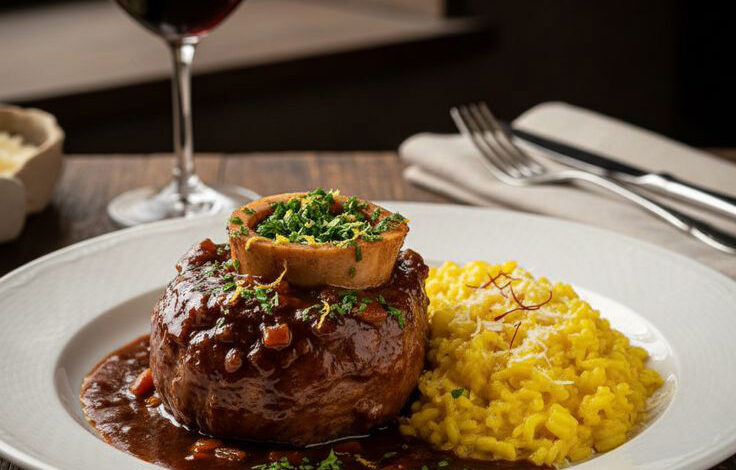
There’s something undeniably comforting about the smell of a slow-cooked meal wafting through your kitchen. Today, we’re diving into the heart of Milanese cuisine with Ossobuco alla Milanese, a classic Italian dish that’s as rich in flavor as it is in history. Imagine tender veal shanks, browned to perfection, simmered slowly with aromatic vegetables, white wine, and a touch of tomato, until the meat almost melts off the bone. And let’s not forget the pièce de résistance: the marrow in the center of the shank, a little nugget of pure indulgence that Italian cooks have cherished for centuries.
Ossobuco, which literally means “bone with a hole,” has been a staple of northern Italy for generations. Traditionally served with risotto alla Milanese—saffron-infused, creamy, and golden—or sometimes with polenta, this dish is all about patience, love, and attention to flavor. If you’ve ever wanted to bring a little taste of Milan into your own kitchen, this recipe will walk you through every step, making the process approachable and downright enjoyable.
Prep and Cook Time
- Prep Time: 20 minutes
- Cook Time: 2 hours 30 minutes
- Total Time: 2 hours 50 minutes
Ingredients (Serves 4)
- 4 veal shanks, about 1 ½ inches thick (about 1 kg total)
- Salt and freshly ground black pepper, to taste
- ½ cup (60 g) all-purpose flour, for dredging
- 4 tablespoons olive oil
- 2 tablespoons unsalted butter
- 1 medium onion, finely chopped
- 2 medium carrots, finely diced
- 2 celery stalks, finely diced
- 3 garlic cloves, minced
- 1 cup (250 ml) dry white wine
- 1 can (400 g) diced tomatoes
- 1 ½ cups (350 ml) beef or veal stock
- 1 teaspoon fresh thyme leaves
- 1 bay leaf
- Zest of 1 lemon
- 2 tablespoons chopped fresh flat-leaf parsley
Step-by-Step Instructions
1. Prep the Shanks
Pat your veal shanks dry with paper towels. This is key—dry meat browns better, which deepens the flavor. Season generously with salt and pepper, then dredge lightly in flour, shaking off any excess. The flour helps create a beautiful crust and slightly thickens the sauce later.
2. Brown the Meat
Heat olive oil and butter in a large, heavy-bottomed pan or Dutch oven over medium-high heat. Once hot, add the shanks and brown them on all sides, about 4–5 minutes per side. Don’t rush this step; browning is where your flavor begins. Remove the shanks and set them aside.
3. Sauté the Vegetables
Lower the heat to medium and add the onion, carrot, and celery. Cook gently for 5–6 minutes until softened and slightly golden. Add the garlic and cook for another 30 seconds—don’t let it burn! This aromatic base, called a soffritto, forms the flavor foundation of your sauce.
4. Deglaze and Build the Sauce
Pour in the white wine, scraping up any browned bits from the pan—they’re packed with flavor! Allow it to reduce by half, about 3–4 minutes. Stir in the diced tomatoes, stock, thyme, and bay leaf. Return the veal shanks to the pan, making sure they’re partially submerged in the liquid.
5. Slow Simmer
Cover the pan with a lid, reduce the heat to low, and let it simmer gently for 2–2 ½ hours. This slow cooking is what makes the meat incredibly tender and the marrow soft and creamy. Check occasionally and spoon some sauce over the shanks to keep them moist.
6. Finish with Gremolata
Once cooked, remove the shanks and keep warm. Stir together lemon zest and chopped parsley, then sprinkle over the dish just before serving. This fresh, zesty topping cuts through the richness and brightens every bite.
Tips and Tricks
- Substitutions: If veal isn’t available, beef shanks work, though the flavor will be slightly different.
- Wine Swap: A dry white wine is best; if you prefer red, you can try it, but it will change the traditional flavor slightly.
- Thickening the Sauce: If your sauce is too thin at the end, simmer uncovered for a few more minutes to concentrate the flavors.
Variations
- Spicy Twist: Add a pinch of red chili flakes with the soffritto for a gentle heat.
- Vegetarian Version: Use large, meaty mushrooms like portobello or king oyster, and follow the same steps, substituting vegetable stock for meat stock.
- Cheesy Upgrade: Serve with a sprinkle of grated Parmigiano-Reggiano or Pecorino for an extra layer of richness.
Serving Suggestions
Traditionally, Ossobuco alla Milanese is served with risotto alla Milanese, but creamy polenta or buttery mashed potatoes are perfect alternatives. Don’t forget fresh crusty bread to soak up the luscious sauce—this is one dish where every last drop matters.
Approximate Nutrition (per serving)
- Calories: 450 kcal
- Protein: 35 g
- Carbs: 15 g
- Fat: 25 g
The veal provides high-quality protein, while vegetables and wine contribute antioxidants and vitamins. Olive oil adds healthy fats that support heart health, making this indulgent meal surprisingly balanced when enjoyed in moderation.
Storage and Reheating
Leftovers can be refrigerated in an airtight container for up to 3 days. To reheat, warm gently on the stove over low heat, adding a splash of stock or water to prevent drying. Ossobuco freezes well too—just make sure it’s cooled completely before freezing, and thaw in the fridge overnight.
Final Thoughts
Making Ossobuco alla Milanese may take time, but the reward is pure comfort and joy. There’s something magical about the slow simmer of rich flavors, the aroma filling your kitchen, and the tender meat that practically falls off the bone. Whether you’re cooking for family, a special dinner, or just treating yourself, this dish is sure to impress and satisfy. Serve it with love, share it generously, and don’t forget to savor every bite—you’ve earned it!
Helpful Cooking Tools
Ossobuco alla Milanese
There’s something undeniably comforting about the smell of a slow-cooked meal wafting through your kitchen. Today, we’re diving into the heart of Milanese cuisine with Ossobuco alla Milanese, a classic...