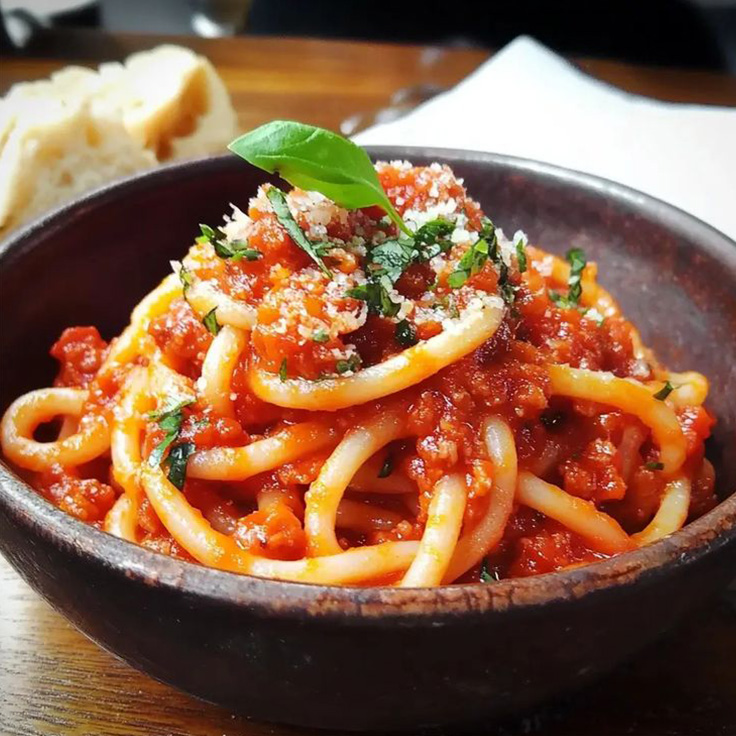
There’s something magical about Italian food, isn’t there? The way a simple plate of pasta can feel like a warm hug, a reminder of home, family, and long, lazy meals shared with laughter. One of my absolute favorites is Bucatini all’Amatriciana, a traditional Roman pasta that manages to be both elegant and comfortingly simple at the same time. With its slightly spicy, tangy tomato sauce, crispy guanciale, and a sprinkle of Pecorino Romano, this dish is the kind of pasta you can savor slowly while daydreaming about cobblestone streets in Italy—or just enjoying a cozy evening in your own kitchen.
Bucatini, for those who haven’t met them before, are long, hollow spaghetti-like noodles. Their hollow center does something magical—it soaks up the sauce in every bite, giving you a burst of flavor that regular spaghetti just can’t match. And the star of this dish, guanciale, is a cured pork cheek that crisps up beautifully, infusing the sauce with smoky, savory richness. Don’t worry if you can’t find guanciale at your local store—I’ll share substitutions later that work just as well without compromising taste.
Now, let’s roll up our sleeves and dive into this classic Roman favorite.
Cooking Time & Prep Time
Prep Time: 10 minutes
Cook Time: 25 minutes
Total Time: 35 minutes
This is one of those recipes that comes together quickly, which is perfect for busy weeknights or when you just need a little comfort food magic.
Ingredients
- 400g (14 oz) bucatini pasta
- 150g (5 oz) guanciale, cut into small strips (or pancetta as a substitute)
- 1 can (400g / 14 oz) peeled tomatoes (preferably Italian quality)
- 50g (1/2 cup) Pecorino Romano cheese, finely grated
- 1 small chili pepper or 1/2 teaspoon red pepper flakes (adjust to taste)
- 1 tablespoon extra-virgin olive oil
- Salt, to taste (keep in mind the Pecorino is salty)
- Freshly ground black pepper, to taste
Step-by-Step Instructions
1. Prepare the guanciale
Start by cutting your guanciale into thin strips. In a large skillet over medium heat, add the guanciale (and a touch of olive oil if your pan is dry). Cook until it’s golden brown and crisp, about 5–7 minutes. Don’t rush this step! The crispness and rendered fat are what will flavor the sauce beautifully. Once done, remove the guanciale but keep the fat in the pan.
2. Make the sauce
Add the chili pepper or red pepper flakes to the hot fat, letting it sizzle for about 30 seconds. Then, crush the peeled tomatoes by hand or with a spoon and add them to the skillet. Let the sauce simmer gently for 15–20 minutes. Stir occasionally—this slow simmer helps deepen the flavor and lets the sauce thicken slightly. Taste toward the end and season lightly with salt and pepper.
3. Cook the bucatini
While the sauce is simmering, bring a large pot of salted water to a boil. Add the bucatini and cook until al dente, usually about 9–11 minutes (check the package instructions). The key here is to slightly undercook the pasta, because it will finish cooking in the sauce and soak up all that delicious flavor.
4. Combine pasta and sauce
Drain the bucatini, reserving a small cup of pasta water. Add the pasta directly to the sauce and toss over medium heat for 1–2 minutes. If the sauce seems too thick, add a little reserved pasta water to loosen it—it should coat every strand of bucatini beautifully. Add the crispy guanciale back into the pan and give everything a gentle toss.
5. Finish with cheese
Remove from heat and sprinkle with Pecorino Romano. Toss lightly to combine, letting the cheese melt slightly and create a creamy coating. For an extra touch of freshness, a small grind of black pepper right before serving works wonders.
Tips, Tricks & Substitutions
- Guanciale substitute: Pancetta is the closest alternative, and even thick-cut bacon works in a pinch. Just avoid lean ham—it won’t give the same richness.
- Tomatoes: San Marzano tomatoes are ideal for their natural sweetness, but any high-quality peeled tomatoes will work.
- Cheese variations: Pecorino Romano is traditional, but Parmesan or a blend works if you prefer a milder flavor.
- Spicy lovers: Add a second chili or some extra red pepper flakes for a bolder kick.
- Vegetarian twist: Omit the meat and sauté the chili in olive oil, then add roasted mushrooms for umami.
Serving Suggestions
Serve Bucatini all’Amatriciana with a simple green salad and a crisp white wine like a Frascati or Vermentino. A slice of crusty bread for mopping up any leftover sauce is heavenly. For special occasions, garnish with extra Pecorino and a drizzle of olive oil to make it feel restaurant-worthy.
Approximate Nutritional Info (per serving, serves 4)
- Calories: 480 kcal
- Protein: 18g
- Carbs: 60g
- Fat: 18g
Health benefits: Tomatoes are rich in antioxidants like lycopene, which supports heart health. Guanciale provides protein and some essential B vitamins, and the olive oil adds heart-healthy fats. Pecorino Romano, while salty, offers calcium for strong bones. This dish is indulgent but can be enjoyed as part of a balanced diet.
Storage & Reheating
Leftovers? No problem! Store in an airtight container in the fridge for up to 2 days. Reheat gently in a skillet with a splash of water to loosen the sauce. Avoid microwaving too aggressively—it can make the pasta gummy. For meal prep, cook the pasta slightly under al dente and combine with the sauce; it reheats beautifully.
Final Thoughts
There’s something so comforting about Bucatini all’Amatriciana—the warmth of the sauce, the crisp guanciale, and that satisfying hollow pasta capturing every drop of flavor. It’s a dish that feels like Italy in every bite, yet is simple enough to make in your own kitchen. Gather your friends, pour a glass of wine, and let this classic Roman pasta fill your home with aroma, flavor, and joy. Give it a try—you might just find it becoming your new weeknight favorite!
Helpful Cooking Tools
Bucatini all’Amatriciana
There’s something magical about Italian food, isn’t there? The way a simple plate of pasta can feel like a warm hug, a reminder of home, family, and long, lazy meals...